
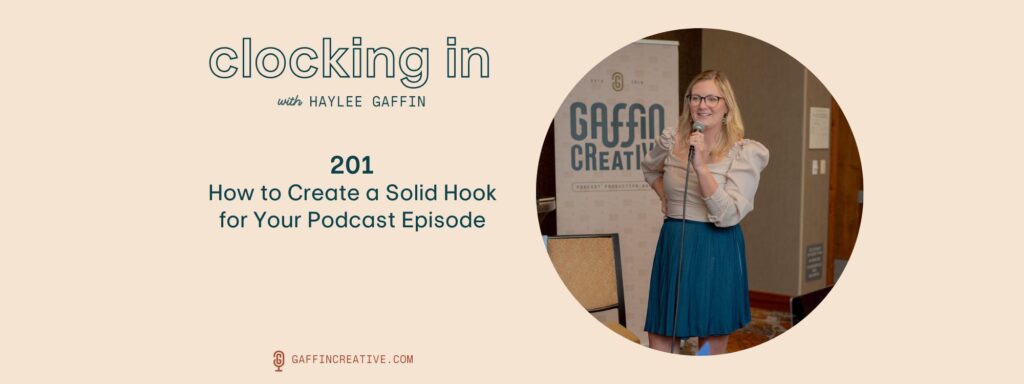
Are you losing listeners in the first five seconds of your show? Today’s episode is all about the impact that the opening of your show can make on listener retention. I’m diving into hooks: how to create them with intention and examples you can use when you record next.
Clocking In with Haylee Gaffin is produced by Gaffin Creative, a podcast production company for creative entrepreneurs. Learn more about our services at Gaffincreative.com, plus you’ll also find resources, show notes, and more for the Clocking In Podcast.
Find on Your Favorite Podcast Player
The First 20 Seconds Are Everything
Listeners today are busy, distracted, and ruthless with their attention. They’re walking, driving, cooking, or multitasking—and their brains are scanning your audio the same way we scroll through social media. One second of disinterest, and they’re gone.
That’s why your first 15–25 seconds need to hook them.
This isn’t just about sounding polished. It’s about giving your audience an immediate reason to care. What’s in it for them? Why should they keep listening? If you can answer those questions up front, you’ll increase retention, build loyalty, and ultimately grow a stronger podcast.
What Most Podcasters Get Wrong About Intros
Here’s the thing: most podcasts start with the same prerecorded intro—music, tagline, a quick welcome. It’s fine for branding, but it’s not what earns attention.
Your listener doesn’t need branding right away—they need relevance.
And when they’ve heard that same intro 10, 20, even 50 times? It starts to feel repetitive, especially for binge listeners. That’s why your episode intro—the one you speak—matters more than your podcast intro (the one you pre-record).
Let’s break it down:
- Podcast Intro: Your standard, static branding intro—typically includes music, your name, your tagline, and a friendly “welcome back.”
- Episode Intro (Hook): The first 15–25 seconds of each episode that tells your listener what this episode is about, who it’s for, and why it matters today.
The Episode Hook: What It Is and Why You Need One
An episode hook is your lead-in. It’s short, punchy, and intentional. It should answer one core question:
“Why should I be listening to this episode right now?”
A good hook:
- Presents a problem your listener relates to
- Teases the transformation or takeaway
- Builds curiosity
- Promises clarity, insight, or value
Let’s look at a few types of hooks that work really well:
1. The Promise Hook
Clearly state the outcome or takeaway.
Example:
“Today, I’m sharing three simple tweaks that could double your podcast retention—no extra content needed.”
Why it works: It sets a clear benefit and lets the listener know exactly what they’ll walk away with.
2. The Relatable Moment Hook
Reflect the listener’s current frustration.
Example:
“Have you ever spent hours recording an episode only to see your retention drop off halfway through? You’re not alone—and I’ve got a fix.”
Why it works: It validates the listener’s experience and positions you as someone who understands and can help.
3. The Myth Buster Hook
Challenge a common belief in your industry.
Example:
“Everyone says your podcast intro should be the first thing people hear. But what if that’s actually hurting your retention?”
Why it works: It surprises the listener and makes them curious enough to keep listening.
4. The Curiosity Hook
Hint at something intriguing—without giving it all away.
Example:
“One small change in your episode structure could boost retention by 20%—and almost no one is doing it.”
Why it works: It sparks interest without revealing the full answer, inviting the listener to stick around.
Your Simple 5-Step Hook Formula
Not sure where to start? Here’s a quick formula to help you write stronger episode openings:
- Start with your goal – What is the ONE thing you want your listener to walk away with?
- Identify the problem – What specific struggle or situation is your listener facing right now?
- Connect the problem to the promise – Show them how this episode addresses the exact thing they’re wrestling with.
- Keep it short – Two to four sentences max. Think tight, clear, and intentional.
- Record it last – Once your episode is complete, it’s easier to craft a hook that aligns with the actual content.
Should You Use a Quote Clip as Your Hook?
You’ve probably heard podcast episodes that start with a juicy quote from the middle of the episode. When done well, this can be very effective.
But here’s the catch: most clip-based openings fall flat.
Why? Because:
- They’re too long.
- They require context the listener doesn’t yet have.
- They drop the listener into the middle of a conversation with no warning.
Instead, use this test:
Is the clip short, punchy, and crystal clear without context?
If not, go with a planned hook.
Personally, I prefer intentional, spoken hooks. They give me control, ensure clarity, and protect the listener experience. And that’s what builds trust and keeps people coming back.
Want to Get Better at This? Join Soundboard Society
If you’re ready to get more strategic with your podcast—and use it as a real business asset—come join us inside Soundboard Society. This is my group coaching program for business owners who want to grow their podcast with purpose, clarity, and actual results.
We talk about everything from episode planning to CTAs, content strategy to retention. And yes—we’ll refine your hooks, too.
Find It Quickly:
Why you shouldn’t start with your podcast intro (1:35)
How I recommend you start your episodes (2:19)
What makes a great hook (3:02)
Four types of hooks for your podcast (3:34)
Tips for creating intentional hooks (4:51)
Opening with a clip from the episode (6:18)
Mastering the first 20 seconds (7:49)
Connect with Haylee:
Soundboard Society: gaffincreative.com/soundboard
Instagram: instagram.com/hayleegaffin
Website: gaffincreative.com


